Ukraine's Communication Lifeline Wobbles, Forcing a Rapid Search for Alternatives
Disruptions to the Starlink network are prompting Ukrainian and European officials to urgently evaluate backup communication systems to maintain military and civilian connectivity.
By Jasmine Coleman ·
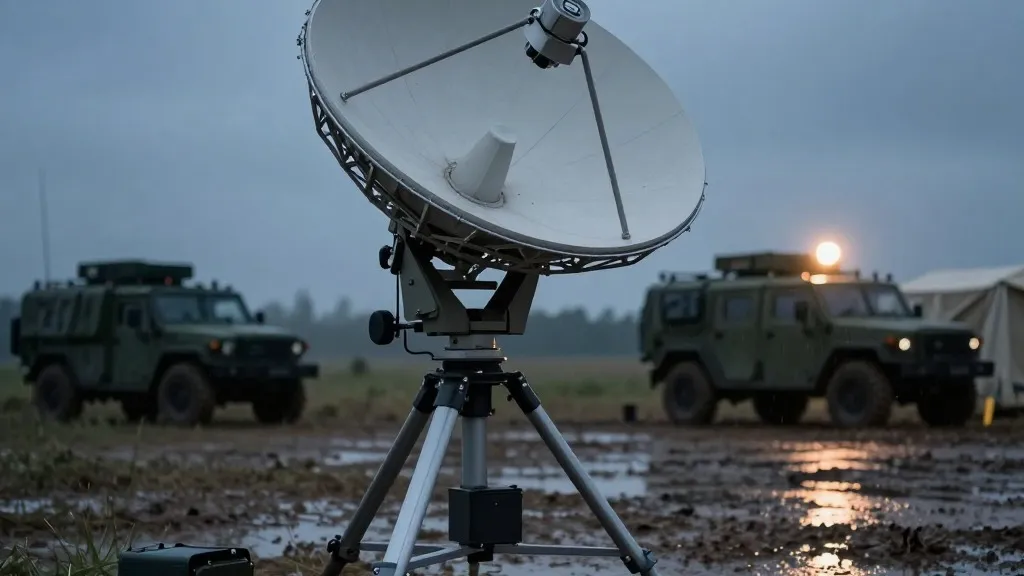
For ordinary Ukrainians and their European allies, the reliability of daily communications and military operations is under renewed scrutiny as the Starlink satellite network experiences unexpected service disruptions. The instability, linked to the political maneuvers of owner Elon Musk, has forced a shift in strategy for a conflict that has long depended on this specific technology. What was once a seamless digital backbone for resistance is now a source of urgent concern, requiring immediate planning for how to sustain operations without full reliance on the system.
Starlink has been the dominant force in keeping Ukraine connected since Russia’s full-scale invasion began. As the world’s largest communications satellite network, it provides high-speed internet and data streams through compact terminals. This infrastructure has been critical for maintaining civilian communications and enabling the Ukrainian military to remotely control drones. These drones are essential for air defense against Russian attacks and for striking targets deep in enemy territory. The network’s widespread availability meant that virtually any equipped vehicle or user could maintain a connection, a capability that has defined the technological landscape of the war for years.
However, the situation is changing. The latest surprise interruptions in service have highlighted the risks of depending on a single commercial provider. European nations and the United States have been the primary financial backers, with the US government and countries like Poland and Germany paying for tens of thousands of commercial terminals sent to Ukraine. These governments have also covered the ongoing subscription fees. Additionally, the US has granted the Ukrainian military access to Starshield, a military-grade version of the service. Ukrainian defense firms, including BlueBird Tech, use this platform to test new technologies in coordination with the armed forces.
Despite its dominance, the system is not without flaws. An anonymous hardware R&D lead at Ukrainian defense company BlueBird Tech noted that Starlink currently offers some of the best satellite coverage available, with virtually no competitors when considering cost, availability, and ease of use. However, the representative pointed out a practical limitation: the antenna must be positioned correctly to receive signals from the satellites. This physical requirement, combined with the recent reliability issues, is driving the search for diversified communication options.
The political dimensions of the service have complicated matters further. With Musk’s political inclinations becoming more prominent, the network’s reliability has become a point of contention. The disruptions are not just technical but are increasingly viewed through a geopolitical lens. This uncertainty is pushing Ukraine and Europe to accelerate plans for alternative systems that can ensure continuity of operations, even if Starlink remains a primary tool in the interim.
Looking ahead, the focus is on building a more resilient communication infrastructure. While Starlink remains a key asset, the goal is to reduce dependency on a single source. The coming weeks will see increased testing of backup solutions and further integration of the military-grade Starshield systems. For now, the priority is ensuring that the flow of data remains unbroken, regardless of the political or technical challenges facing the main provider.
Source: Ars Technica