Tesla admits it needs its own maps to fix driving errors
The company is building a new mapping system from fleet data to correct speed limit and routing issues, reversing years of public skepticism about the need for detailed cartography.
By Sofia Ramirez ·
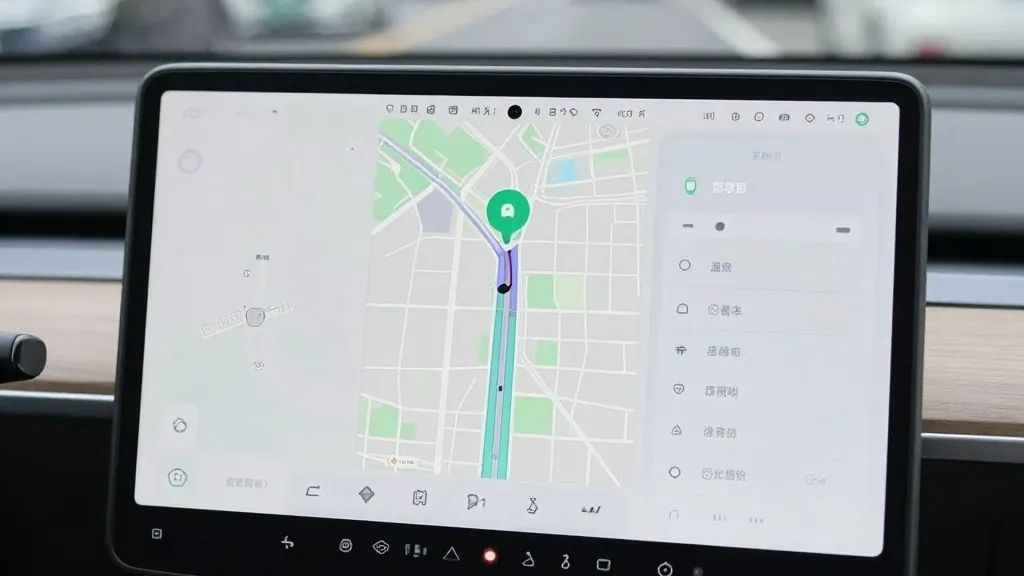
In 55 percent of the 30 km/h zones tested in Brussels, Tesla’s Full Self-Driving system recently exceeded the speed limit, averaging 44 km/h. This specific failure has highlighted a long-standing frustration among drivers and safety advocates, prompting the automaker to admit that its vision-only approach requires significant support from a dedicated mapping infrastructure.
During the Q3 2026 earnings call, Tesla’s VP of AI, Ashok Elluswamy, confirmed that the company is developing its own maps to address common operational errors. The new system is designed to correct issues related to reading speed limits, identifying parking spots, and selecting efficient routes. Elluswamy stated that the company should no longer depend on external providers for this critical data, noting that the new architecture will be built on an AI-based framework fed by collective learning from the fleet.
The implementation of this technology is staged. It will initially handle the start and end of trips with the upcoming FSD v15 release. Over the following months, the system is expected to take over broader navigation, parking, and destination management. The maps will also be trained to learn individual driver preferences and respond to voice commands, creating a more personalized driving experience.
This development marks a significant departure from the company’s historical stance. In 2019, CEO Elon Musk described high-precision lane maps as a "huge mistake" and a "really bad idea" that made self-driving systems "extremely brittle." At the time, he argued that relying on detailed maps was a crutch, similar to the use of lidar, which he famously called a "fool’s errand." The message was that Tesla would solve driving using cameras and AI alone, without the need for pre-mapped environments.
However, the practical challenges of the current system have led to a re-evaluation. A Belgian road safety group found that the car’s display often showed incorrect speed limits, such as 50 km/h in 30 km/h zones, leading to frequent speeding. In the United States, the NHTSA is currently weighing an investigation into claims that Tesla Robotaxis speed through active school zones, involving approximately 1,000 Model Y and Cybercab vehicles. These incidents underscore that simple road information, like speed limit signs, remains a difficult hurdle for the current vision-based model.
The new approach aligns Tesla’s strategy more closely with competitors like Waymo. While Waymo uses lidar-equipped vehicles to create detailed HD maps before launching service in a city, Tesla is now using its fleet to collect data that feeds into a company-built map. This data helps every vehicle in the network drive more accurately. The primary technical difference remains the presence of lidar on Waymo’s vehicles, but the fundamental concept of using a fleet to build and update maps is now shared by both companies.
This shift also reflects how Tesla’s Robotaxi service is currently operating, which is limited to specific geofenced areas in various cities. As the fleet-built maps become more detailed over time, they may evolve toward the centimeter-level precision that Musk previously dismissed. For now, the focus is on fixing the most visible errors in the driving experience.
The stakes for Tesla are high as it aims to launch unsupervised FSD in consumer cars in Q2 2027. The new mapping layer is a critical component in making the system reliable enough for widespread use. By addressing these foundational issues, Tesla hopes to validate its long-term vision of a self-driving future that works effectively in the real world, rather than just in theoretical scenarios.
Source: Electrek